
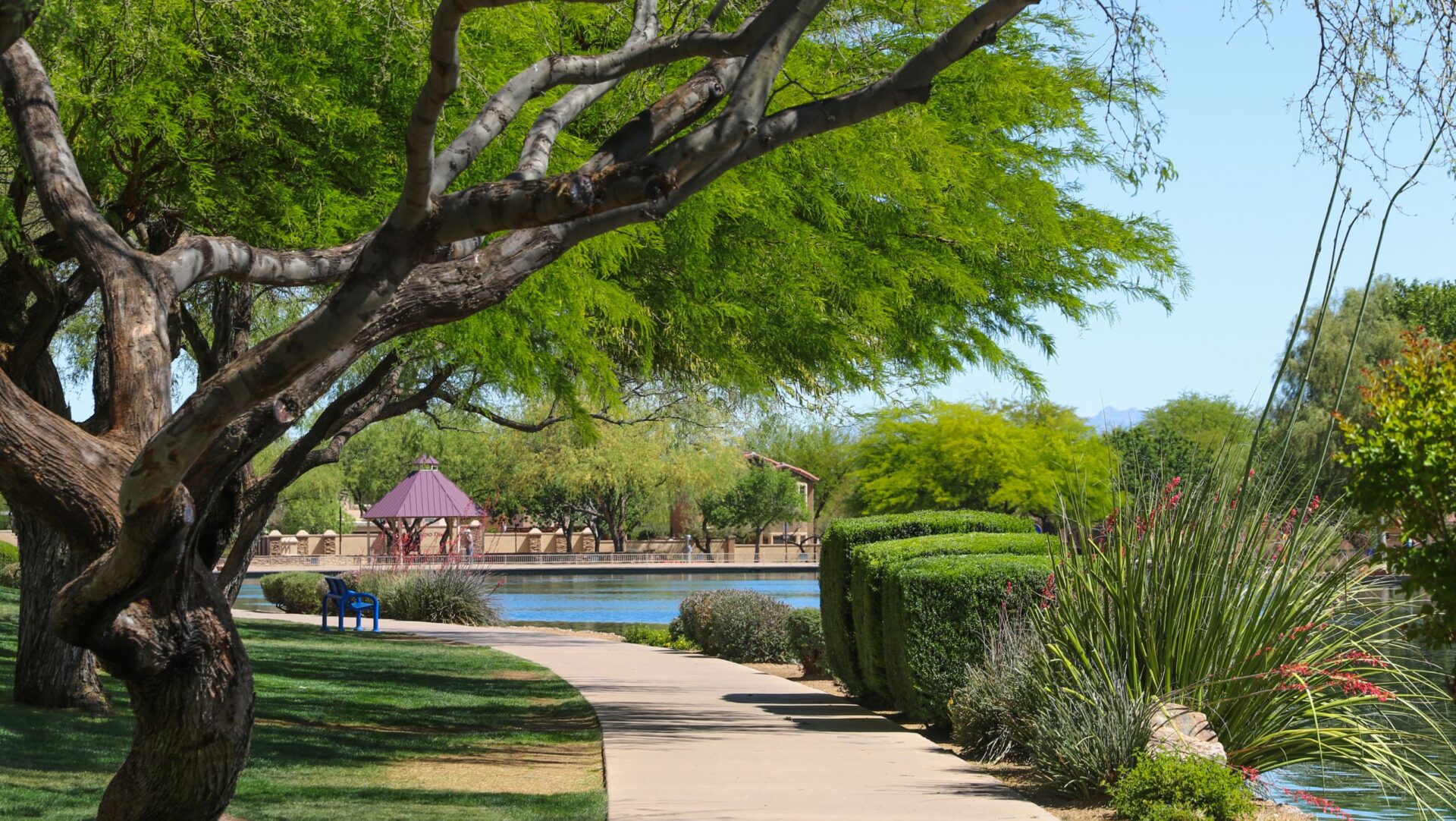
The trail was there before the houses.
From its early development, Rancho Sahuarita was planned with a trail network, parks, Sahuarita Lake, and a community hub as connected elements of a broader design, not as features added once homes were built. The community was conceived as a whole and developed accordingly.
More than 25 years later, the evidence of that approach is visible in how the community operates day to day.
Key Takeaways
- Rancho Sahuarita has operated as a master planned community for more than 25 years, founded on a guiding principle of “Creating a Better Life”
- The trail network, Sahuarita Lake, parks, and community facilities were included as connected elements in Rancho Sahuarita’s early development
- Today, the community includes more than 25 miles of trails, more than 15 parks, and a 10-acre lake connected across the broader layout
- Entrada Del Toro, the community’s newest neighborhood, continues the same design approach while connecting residents to the existing trail network, parks, and community facilities
What does master planning mean in practice?
A master planned community follows a coordinated long-term plan for housing, transportation, parks, recreation, and other shared spaces. The defining idea is that these elements are considered together rather than developed as unrelated additions.
In a community developed without that coordination, amenities tend to accumulate over time as opportunities arise. A park is added after a neighborhood fills in. A fitness facility opens when demand justifies it. A trail is built where space remains available.
In a master planned community, the locations of parks, trails, community facilities, and connecting routes are considered during the planning process rather than after. At Rancho Sahuarita, that coordinated approach included the lake, the trail network, parks, community facilities, and nearby services as connected parts of the same layout.
What was the original vision for Rancho Sahuarita?
Rancho Sahuarita was founded around the principle “Creating a Better Life.” That idea has continued to shape how the community describes its approach to shared spaces, recreation, and everyday connectivity.
Bob Sharpe founded Rancho Sahuarita in southern Arizona with a focus on what a deliberately designed community could offer its residents. The guiding principle reflects an approach that treated shared spaces, connectivity, and everyday access to recreation as central elements of the plan rather than optional additions.
The evidence of that original vision is visible in what still works more than 25 years later: trails in regular use, a lake that anchors community events, and a community facility running more than 350 programs per year.
Why does the placement of Sahuarita Lake matter?
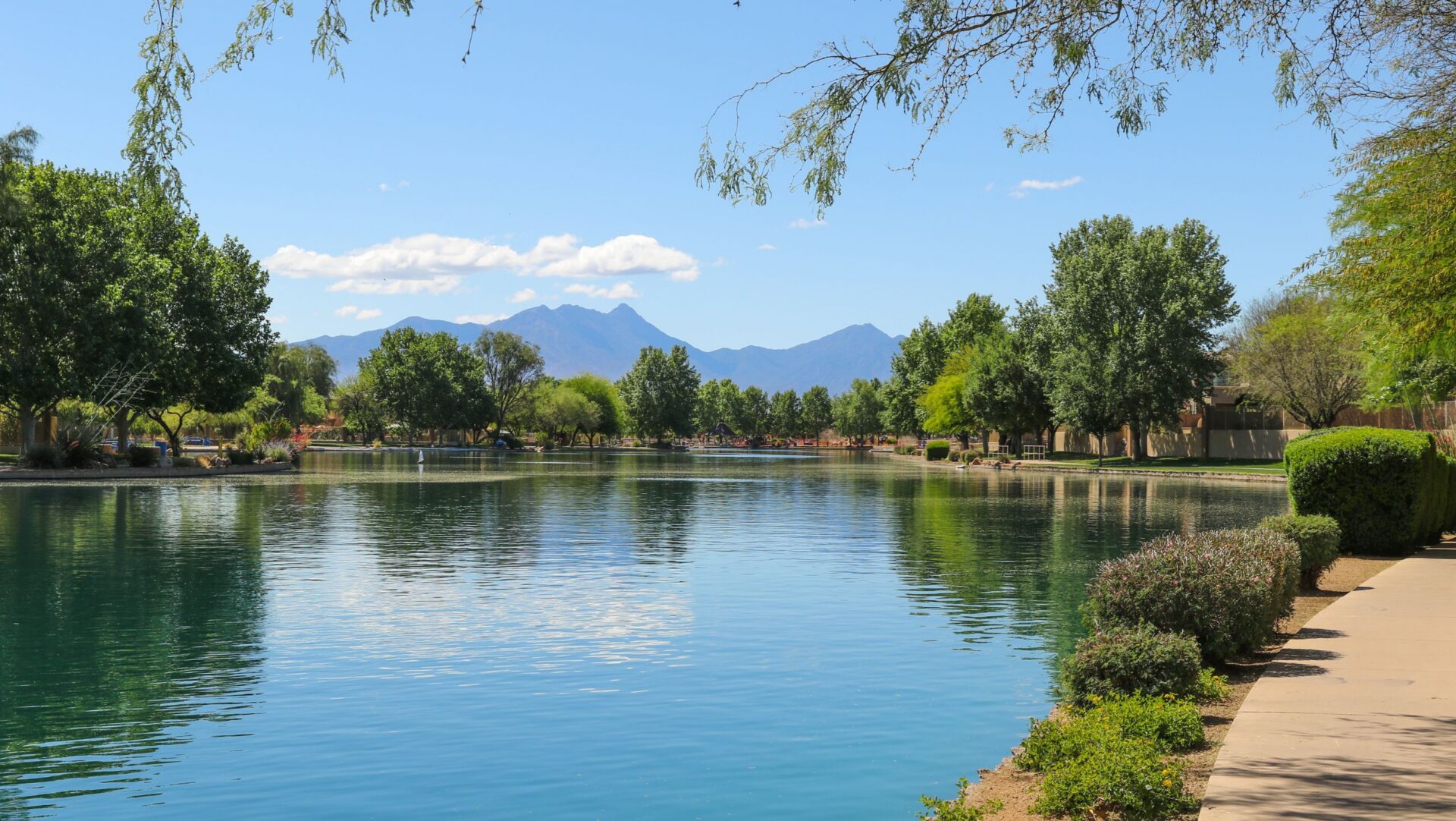
Sahuarita Lake sits near the center of Rancho Sahuarita and connects with the broader trail network, making it reachable on foot from multiple neighborhoods throughout the community.
The placement of Sahuarita Lake is one of the clearest examples of what a coordinated design approach can produce. A 10-acre lake is a significant shared resource. Where it sits determines whether residents use it regularly or simply know it exists.
At Rancho Sahuarita, the lake connects with the trail network and is reachable from multiple neighborhoods. Residents use it for walking, fishing with a valid Arizona fishing license, and community events throughout the year. Because of its position within the broader trail system, it functions as one of the community’s most visible shared gathering places rather than an isolated feature at one end of the layout.
How do the trails and parks connect the community?
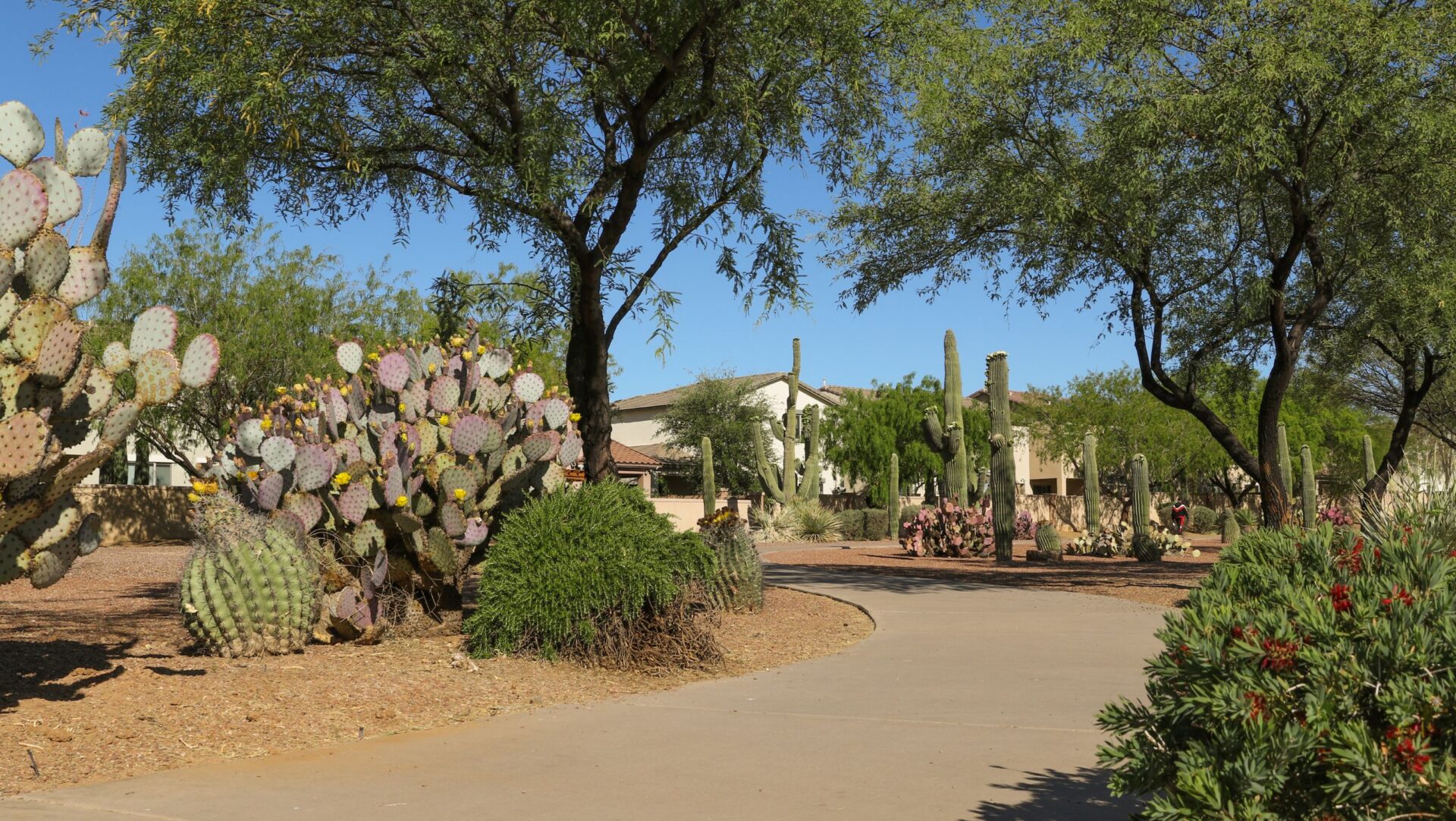
Rancho Sahuarita’s trail network was designed to connect neighborhoods with parks, schools, and the recreation centers, so residents can reach destinations across the community using routes that run through shared spaces rather than primarily along major roads.
More than 25 miles of trails and 15-plus parks are distributed across the community. The trails link neighborhoods to each other, to the three large neighborhood parks (each with pools, playgrounds, sport courts, and picnic areas) and to Sahuarita Lake. Residents can reach parks, schools, the lake, and other community destinations using connected routes that reduce the need to travel along major roads.
Establishing that kind of network requires coordinating trail routing with park locations and road layout during the planning process. It is substantially harder to create a connected system that was not part of the original layout.
What role does Club Rancho Sahuarita play in the system?
Two people exercise on elliptical machines in a gym, smiling and talking to each other. Other gym equipment and people can be seen in the background.
Club Rancho Sahuarita is the community’s central facility for fitness, classes, recreation, and shared programming. Its location connects with the trail and park network, making it part of the broader community layout rather than a standalone destination.
Club Rancho Sahuarita provides a fully equipped fitness facility, group fitness classes, and a community calendar with more than 350 programs, events, and activities per year. A community center positioned at the edge of a neighborhood, accessible mainly by car, functions differently than one connected to the trail network and reachable on foot from multiple directions.
Rancho Sahuarita’s scale also gives the community a larger base of residents, facilities, and shared resources to support that level of recurring programming. The original plan included all the community’s amenities as part of its connected infrastructure, which made it possible to sustain that programming over time.
What does 25 years of continued use reveal?
The most honest test of a community design is not how it functions when new, but whether residents continue using it once daily life has become routine.
At Rancho Sahuarita, the trails remain in regular use. The lake continues to serve as the setting for community events. Club Rancho Sahuarita maintains a year-round programming calendar. More than 25 years later, the original network of trails, parks, community facilities, and shared spaces remains central to how the community operates.
The community’s 25th anniversary marked that continued use, not as a historical milestone, but as an ongoing characteristic of how residents move through and interact with the community.
What does Entrada Del Toro add to this story?
Entrada Del Toro extends Rancho Sahuarita southward while continuing the same approach of connected trails, shared community amenities, and a neighborhood facility developed alongside the homes.
The Entrada Del Toro neighborhood connects directly to the existing trail network, providing access to Sahuarita Lake, Club Rancho Sahuarita, and the broader community from the day a resident moves in. Club Del Toro was developed alongside the new homes as the neighborhood’s amenity hub, continuing the approach that shaped the rest of the community.
For details on home availability, builders, and what’s currently open in Entrada Del Toro, see the Entrada Del Toro landing page.
The trail was there before the houses, and it is still there.
That continuity is the most visible result of how Rancho Sahuarita was planned.
Explore our story and schedule a visit to see the trails, the lake, and a community that has continued to develop around a connected plan for more than 25 years.