
Most people researching Rancho Sahuarita have already done the math on square footage and price per square foot for their new home. They’ve decided on what the ideal community to live in. The question that lingers is the commute. How long does it really take to get to work in the morning? What does it feel like during rush hour? And if you are going to the office for only two or three days a week, does the distance even matter?
Sahuarita sits just a short drive south of downtown Tucson via I-19, and the drive is commonly estimated at about 20 minutes under normal conditions. That number is reasonably accurate most of the time, and it is worth understanding why, and when it is not.
Key Takeaways
- Sahuarita sits approximately 20 to 22 miles south of downtown Tucson via I-19, and the commute is about 20 minutes under normal conditions.
- Rush hour on I-19 typically means reduced speed, not the stop-and-go gridlock common in larger metro areas.
- For hybrid workers commuting two to three days a week, the drive becomes a manageable part of the routine rather than a daily burden.
- The drive from Rancho Sahuarita to the Raytheon Tucson campus is often estimated at about 30 minutes via I-19 North.
- The extra miles trade off against newer homes, more than 25 miles of trails, Sahuarita Lake, and a community built around everyday convenience.
The Drive at a Glance
The route from Rancho Sahuarita to central Tucson is primarily a single interstate with minimal surface-street navigation. That matters because surface streets are where commutes get unpredictable in most metro areas. On I-19, the experience is more straightforward. You merge, you drive north, you exit near your destination. Most of the variance comes from departure time, not from navigating a complicated route.
Most major Tucson employment destinations are reachable in 30 minutes or less via I-19 North. A few common benchmarks residents use when planning their commute:
- Downtown Tucson: approximately 25 to 30 minutes
- University of Arizona: approximately 30 minutes
- Raytheon Tucson Campus: often estimated at about 30 minutes
- Davis-Monthan Air Force Base: approximately 45 minutes via I-10 East
Times reflect normal traffic conditions. Verify current routing via Google Maps before your move.
What Rush Hour on I-19 Actually Feels Like
Peak hours slow the drive, but not in the way most people picture when they hear the phrase “rush hour commute.” This is not a surface-street-heavy metro grind. Commuters who have moved to Rancho Sahuarita from Phoenix, Los Angeles or Dallas consistently note that the I-19 corridor moves differently. When traffic builds, it usually means reduced speed, not the kind of stop-and-go gridlock that stretches a 20-mile drive into 75 minutes.
That relative predictability is one reason the commute settles into a routine faster than people expect. Departure time has more influence on the drive than almost anything else. Leaving 15 to 20 minutes earlier in the morning can meaningfully reduce the drive for anyone heading north during peak hours. Checking a live mapping app at your expected commute window before you commit to a schedule is worth the 10 minutes it takes.
If You Are Commuting Two or Three Days a Week
For hybrid workers, the math changes entirely. An estimated 25-to-30-minute highway drive a few days a week is not a lifestyle compromise for most people. It is a Tuesday and Thursday routine. On the days you stay home, you are not in the car at all. You are on the trails around Sahuarita Lake, in a fitness class at Club Rancho Sahuarita, or running the kind of errands that stay quick because groceries and daily conveniences are within the community or just a few minutes away at Rancho Sahuarita Marketplace.
That is the actual tradeoff for hybrid workers. You are not giving up convenience. You are trading a slightly longer drive on two or three days for a daily environment that many residents say feels calmer and more intentional than living inside Tucson proper. Most people who make the adjustment say they stop thinking about the commute within the first couple of months.
The Raytheon Commute From Rancho Sahuarita
The drive from Rancho Sahuarita to the Raytheon Tucson campus at 1151 E. Hermans Road is often estimated at about 30 minutes via I-19 North. The route stays on the interstate for most of the distance and involves minimal navigation changes. For defense and aerospace professionals, that kind of straightforward routing matters. Shift start times and gate access windows require consistent arrival, and a route that relies primarily on one interstate is easier to plan around than one that strings together multiple surface streets.
If you are relocating to Southern Arizona for a position at Raytheon or a related defense contractor, Rancho Sahuarita is one of the more practical options in the region. The commute access is real, and so is what you come home to.
What You Are Trading the Extra Miles For
The commute from Sahuarita is longer than living in central Tucson. That is not a caveat to bury. It is the honest center of the decision. What changes for most residents is how the commute fits into a broader daily experience once routines settle in.
Rancho Sahuarita is a true master-planned community with more than 25 years of continuous development behind it. Our builders currently include KB Home, Lennar, Meritage, D.R. Horton, Richmond American and Century Complete, and the newest neighborhood, Entrada del Toro, is now open. Homes here generally offer more square footage at a lower price per square foot than comparable options in Tucson proper. The community is served by the Sahuarita Unified School District, which matters for buyers planning ahead.
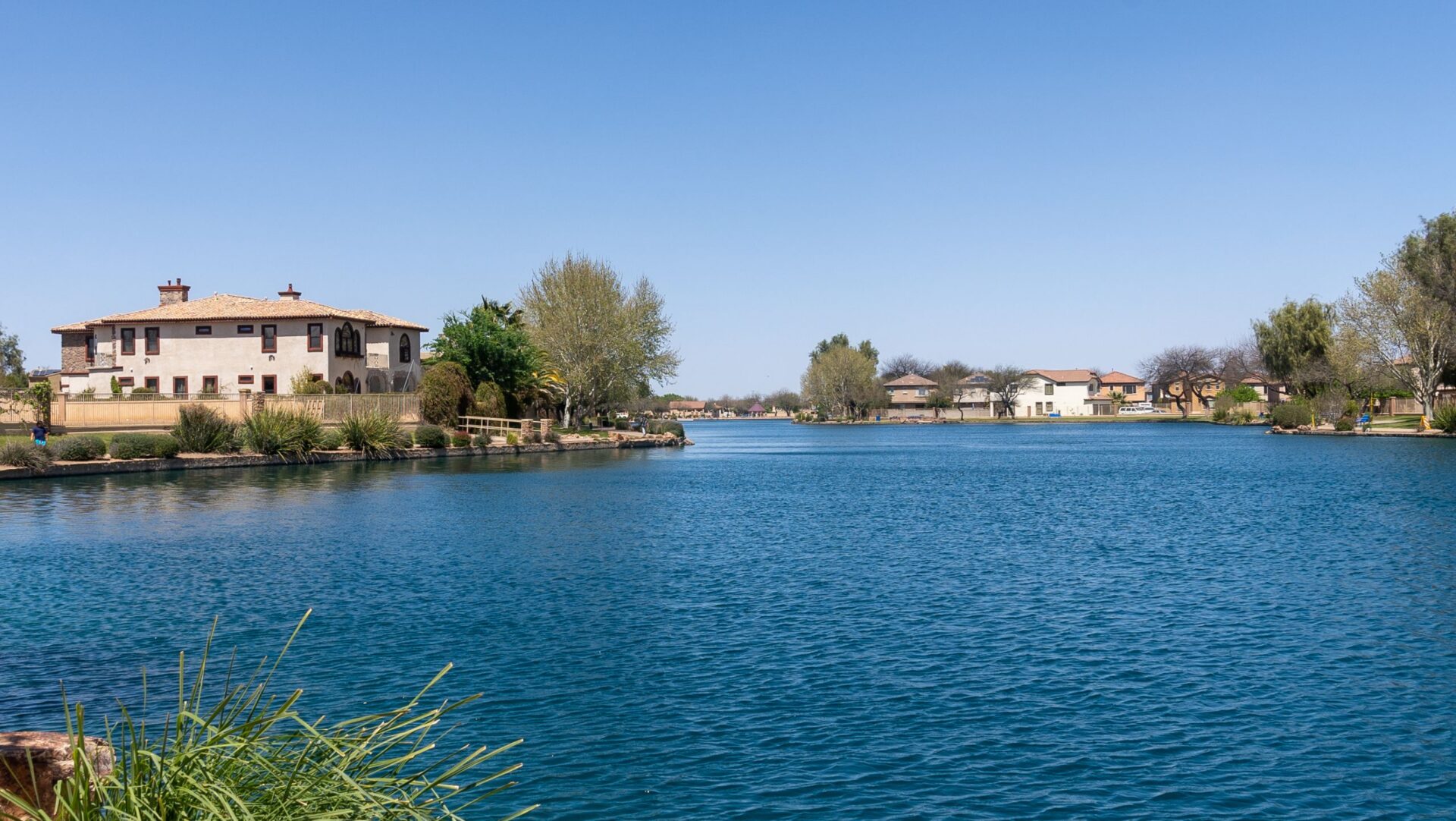
What the extra miles buys you is more than a newer home. It is more than 25 miles of connected trails that start at your front door, a 10-acre fishing-friendly lake at the center of the community, fitness programming and group classes at Club Rancho Sahuarita, over 350 community events a year, and a daily pace that feels measurably different from dense urban living. For buyers who want to build roots in a place rather than just occupy an address, that difference tends to compound over time.
Whether the tradeoff is right for you depends on how you want to spend the hours outside of work and traffic. For many people evaluating their first home purchase in Southern Arizona, those hours end up being the deciding factor. You can read more about how that decision plays out over time in this longer look at long-term value in master-planned communities.
Ready to see what is available? Find your home at Rancho Sahuarita.
Practical Tips for Making the Drive Work
Testing an earlier departure during your first few weeks is the single most useful adjustment most commuters make. Morning traffic on I-19 varies by season, destination and road conditions, and finding your window is easier with a few weeks of firsthand data than with any general estimate.
The I-19 corridor is well-suited for podcasts, audiobooks and hands-free calls. Many residents treat the drive as structured transition time between work and home, and the predictability of the route makes that easier than it is on a stop-and-go surface-street commute.
If you are part of a dual-income household heading to different destinations, map both commutes before you decide. Most Tucson employers are a straight shot up I-19, and for military families, Davis-Monthan is well within the range that makes Rancho Sahuarita a natural fit.
Fueling up near Rancho Sahuarita Marketplace rather than building a Tucson stop into your routine keeps daily errands close to home and reduces the reasons to make extra trips north.
Is the Sahuarita Commute Worth It?
For most buyers seriously evaluating Rancho Sahuarita, the commute becomes a smaller part of the equation once they spend time in the community. The drive is real. The distance is real. What tends to shift is the context around it. When you are walking the trails on a Wednesday morning before logging into work, or watching your kids ride bikes to the park without crossing a busy street, the 20-30 minutes on I-19 becomes one piece of a much larger picture.
The clearest way to evaluate the tradeoff is to experience it directly. Drive the route at your expected commute time. Walk the trails. Visit Sahuarita Lake on a weekend morning. See what to look for when choosing a community in Arizona if you are still early in the decision. And when you are ready to see what is currently available, explore the new homes at Rancho Sahuarita and plan a visit on your own terms.
Interested in Living in Rancho Sahuarita?
Our community is dedicated to Creating a Better Life for you and your family by offering everything you need to live, play and grow. Get one step closer to living the Rancho Sahuarita lifestyle by scheduling a tour.
Frequently Asked Questions
How long is the commute from Sahuarita to Tucson?
The commute from Sahuarita to Tucson is commonly estimated at about 25 to 30 minutes under normal conditions via I-19 North. During busier commute periods, the drive may take longer depending on departure time and destination.
What is the commute from Sahuarita to Raytheon?
The drive from Rancho Sahuarita to the Raytheon Tucson campus is often estimated at about 30 minutes via I-19 North to the Hermans Road area. Actual drive time will vary by departure time, traffic and exact starting point within the community.
Is traffic bad on I-19 from Sahuarita to Tucson during rush hour?
Rush hour on I-19 can slow movement, but most commuters describe the route as significantly more manageable than commutes in larger metro areas. The primary effect is reduced speed rather than stop-and-go gridlock. Checking live traffic during your expected commute window gives you the most accurate picture for your specific situation.
Is Rancho Sahuarita a good place to live if you work in Tucson?
For many people working in Tucson, especially hybrid workers commuting two to three days a week, Rancho Sahuarita offers a practical balance between commute access and a community-centered lifestyle. The tradeoff is a longer drive in exchange for newer homes, walkable amenities and a daily environment that many residents find meaningfully different from living inside Tucson proper.