
Key Takeaways
- Renting first when relocating gives you time to learn neighborhoods before committing to a purchase.
- Buying makes sense when you find a community that genuinely fits your lifestyle and long-term plans.
- Master-planned communities offer social connection and built-in amenities that matter more than square footage over time.
- The right question is not whether you can afford to buy. It is whether you have found a place worth committing to.
- Visit Southern Arizona communities in person, at different times of day, before deciding where to put down roots.
You moved to Southern Arizona for a job opportunity or a fresh start. Now you are asking yourself whether to keep renting or take the leap into homeownership.
The decision feels harder here than it might somewhere else. You do not know the neighborhoods yet. You are not sure the community you are renting in is where you want to stay for the next decade. And every real estate conversation in Arizona seems to orbit around rates and market timing rather than the life you actually want to build.
Most people approach renting vs. buying as a financial calculation. The real question is whether you have found a place worth committing to. Those are different questions, and in Southern Arizona, the second one matters more.
Why Renting First Is Actually the Smart Move
Renting first makes practical sense when you are new to the area. You do not know which neighborhoods feel right yet. You have not figured out your commute patterns or where you actually want to spend your weekends.
Southern Arizona is geographically spread out. Tucson’s job centers, shopping districts, and residential areas do not always cluster together the way they do in denser cities.
Renting gives you time to learn these patterns without locking in a 30-year decision. You can test different areas, experience seasonal weather variations firsthand, and figure out which amenities you actually use versus which ones just sounded good when you were researching from out of state.
The rental market in Southern Arizona is reasonable. You can find quality apartments and townhomes in Tucson across a wide range of price points, which gives you real breathing room to explore without feeling like you are throwing money away while you figure out your next move.
Renting for a stretch before buying is not a workaround. It is how you build the local knowledge that makes your eventual purchase decision a confident one.
It also makes sense if your job situation is not fully settled. If you are in a probationary period, working contract-to-hire, or still evaluating employers in the region, the flexibility of a lease protects you from anchoring to one location before you are ready.
When Buying Starts to Make More Sense
The picture shifts once you know you are staying. If you can picture yourself in the same community for at least five years, buying begins to pull ahead on most measures.
Timeline is the variable that changes everything. If you can genuinely see yourself in the same community for five years or more, the case for buying gets much stronger. If you are still figuring out whether Southern Arizona is home, renting gives you time to be sure before you commit.
Every rent payment leaves your hands and stays gone. Every mortgage payment builds a little more ownership in something that belongs to you. That gap is small in year one. Over five or ten years of staying in a place you love, it becomes one of the more meaningful financial decisions you will have made.
Rent is also unpredictable and at risk of high increases with each year that passes. A fixed-rate mortgage does not work that way. Your principal and interest payment stays the same whether you are in year two or year twelve. That predictability matters, especially when you have put down roots and built a life around a community.
Buying makes the most sense when three things align: you have found a community that fits your lifestyle, your income and job stability support the higher upfront costs, and you are planning to stay long enough for equity accumulation to offset transaction costs and build real wealth.
Life stage matters too. If you are planning to start a family, want a dog, or need space for hobbies that require a garage or yard, homeownership removes the restrictions that come with most rental properties. You gain control over your living environment in ways that compound over time.
What You Will Actually Think About in Year Five
Most articles about buying a home in Arizona lead with interest rates and affordability calculators. Those things matter. They are just not what you will think about five years from now.
What you will think about is whether you know your neighbors. Whether there is somewhere to walk your dog that does not require getting in your car. Whether you can meet a friend for a workout or a community event without elaborate planning. Whether the community has enough happening that you actually want to stay in on weekends.
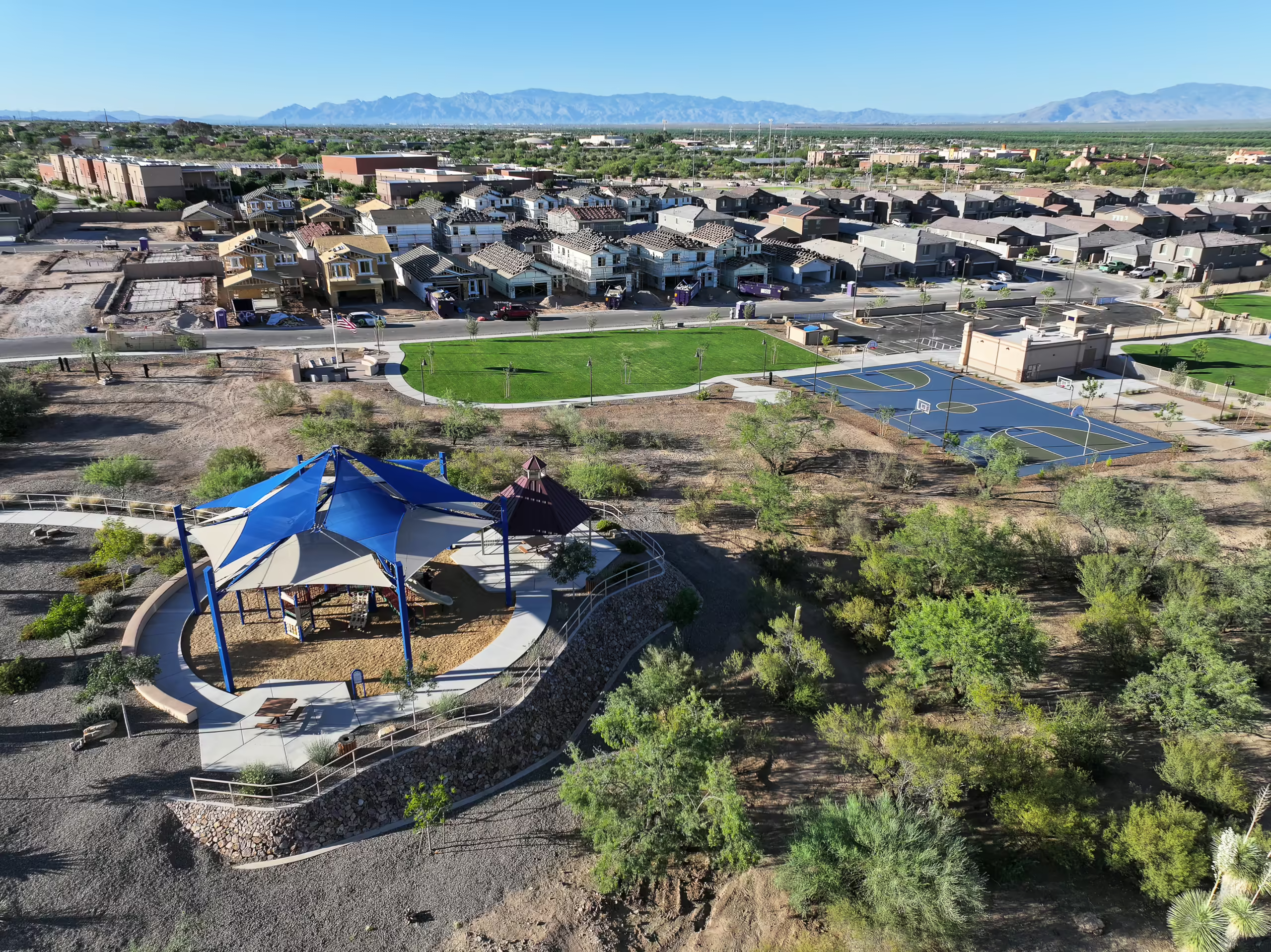
Southern Arizona attracts people who want outdoor access. Trails, parks, and open space are not nice-to-haves here. They are part of why people choose this region in the first place. When you are evaluating where to buy, look at what you can reach on foot or by bike from your front door. Communities that weave trails and parks into daily life create more opportunities for spontaneous activity and natural connection with neighbors.
The social infrastructure of a community determines whether you will actually build relationships or just live near other people. Look for regular events, shared amenities, and spaces designed to make it easy to meet neighbors. This is harder to put a number on than square footage. It has more impact on whether you are happy with your decision three years later.
For young professionals and first-time buyers, this often comes down to weighing a master-planned community against an older established neighborhood. On one side: predictability, built-in amenities, and a community designed to function. On the other: character, fewer rules, and lower homeowners association (HOA) fees. Neither is automatically better. Your actual daily life should make the call.
How Rancho Sahuarita Helps People Put Down Roots
Rancho Sahuarita sits about 20 minutes south of Tucson. Close enough for daily commutes, far enough to feel separate from urban density. The community is built around the idea that amenities and social infrastructure matter as much as the homes themselves.
The centerpiece is Sahuarita Lake, a 10-acre lake surrounded by walking paths and open green space. Residents return to it in the mornings, after work, and on weekends. It gives the community an identity and a rhythm that you do not get from a subdivision built around cul-de-sacs.
Club Rancho Sahuarita includes fitness facilities, pools, sports courts, and event spaces. The difference between a community with a fitness center and a community where people actually use it comes down to design, maintenance, and programming. Rancho Sahuarita invests in all three.
The trail system connects different sections of the community, making it possible to walk or bike for daily errands and recreation without a car for every trip. That level of walkability is uncommon in Southern Arizona, where most neighborhoods are designed around vehicle access first.
Community events run throughout the year: fitness classes, farmers markets, holiday celebrations, outdoor concerts. The consistent programming creates low-pressure opportunities to meet neighbors. You are not committing to a formal social obligation. You are just showing up to something happening where you live. Over time, that is what connection looks like.
For first-time buyers, that built-in environment takes the friction out of building a social life in a new place. The opportunities are already there. You do not have to engineer them.
Rancho Sahuarita is also close to quality schools, which matters for buyers thinking about long-term family plans. Sahuarita has earned recognition as one of the best places to live in Arizona, and residents who have been here for years will tell you it holds up. Their stories are on the resident stories page if you want to hear it in their own words.
Questions Worth Sitting With Before You Decide
The best version of this decision starts with your situation, not the market. Here are the questions that actually move you toward clarity.
How long do you plan to stay?
Less than three years, and renting usually makes more sense. Transaction costs on buying and selling eat into any equity you build in that window. Five years or more, and buying becomes far more viable.
Have you found a community that matches how you actually live?
Not the lifestyle you think you should have. The one you actually have. If you spend every weekend outdoors, you need trail access. If you are social and want to meet people, you need community infrastructure that supports it. If you work from home, you need to know what the noise environment is like on a Tuesday morning.
Is your job situation stable?
You do not need to stay in the same role forever. But you should have real confidence in your income and career trajectory in the region. Still figuring out whether your current employer is the right fit? Renting keeps your options open.
Do you have the financial cushion for unexpected costs?
Homeownership comes with maintenance, repairs, and the occasional emergency that renting does not. If your savings would be depleted by the down payment, you are not ready to buy yet. Reserves matter.
Are you comparing costs realistically?
A monthly rent payment and a mortgage payment are not the same thing. Homeownership includes property taxes, insurance, HOA fees, maintenance, and repairs. Make sure you are comparing total monthly costs, not just the principal and interest line.
The thread running through all of these is that they focus on your situation rather than external market factors. The best time to buy is when your life circumstances support it, and you have found a place worth staying.
See It Before You Decide
You cannot make this decision from behind a computer screen. You need to visit communities in person, at different times of day, to understand how they actually work.
Start with three to five communities that match your general criteria for location, price range, and amenities. Then visit each one more than once. A weekday morning tells you one thing about a neighborhood. A weekend afternoon tells you something different. A community event tells you the rest.
Walk or drive the route to your workplace during actual commute hours, not at 2 p.m. when traffic is light.
Check the surrounding area. Where is the closest grocery store? How far to restaurants, coffee shops, gyms, and the other places you would actually want to spend time outside of home and work?
Talk to residents. People walking dogs or using community amenities are usually willing to share their honest experience. Ask what they wish they had known before moving in. Ask what surprised them, positive and negative. You will learn things that do not appear in any brochure or listing description.
For buyers working through how to choose the right community in Arizona, this research phase is where the real decision gets made. The communities that hold up to repeated visits and honest scrutiny are the ones worth committing to.
Communities like Rancho Sahuarita show what is possible when that decision is approached as a lifestyle choice rather than a financial transaction. If you are ready to see it for yourself, schedule a tour and spend time in the community before you decide. Walk the trails. Visit the lake. Talk to people who live there.